Rotary Evaporator (Rotavap) – Uses in Modern Restaurant Kitchens
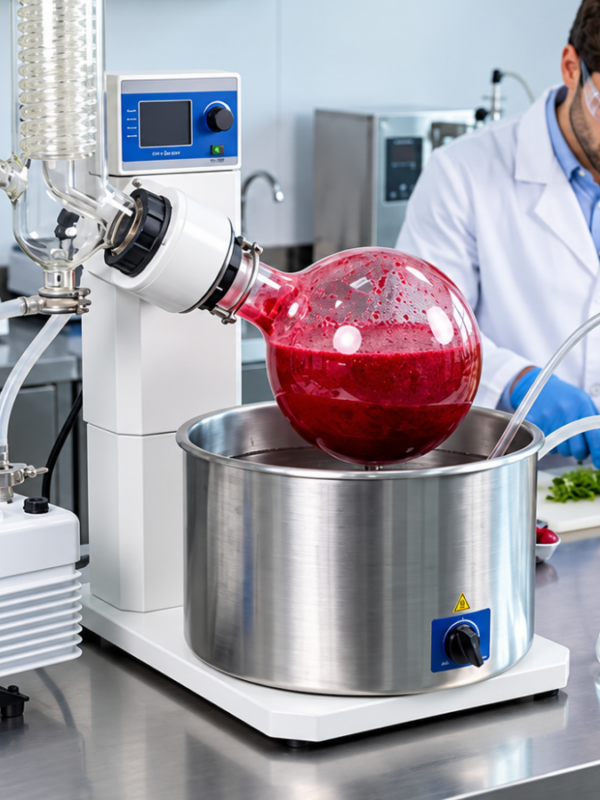
The rotary evaporator, also known as a rotavap, combines evaporation under vacuum and condensation (liquid–gas–liquid). This process is called distillation, and its purpose is to separate a given mixture into its components based on their respective volatilities.
The technique is explored by creative chefs in modern restaurant kitchens for two main purposes:
- To concentrate non-volatile components in a mixture (e.g., concentrating the purest and freshest flavours from a blood orange by removing water).
- To extract volatile aroma and flavour molecules from mixtures gently and at low temperatures (e.g., extracting the desired flavours from a blend of alcohol, herbs and fruit without exposing the mixture to high temperatures).
It is possible to create two completely different products from one technique and a single ingredient. The process can produce aromatic distillates that can be used to infuse or intensify flavour without significantly affecting the texture or composition of a culinary creation.
Rotary Evaporator Uses in Modern Cooking
Compared with standard distillation processes, the significant difference when using the PolyScience Culinary Rotary Evaporator Kit is the lower temperature required for evaporation.The key point of this technique is the gentle, precise and efficient separation of food compounds while reducing unwanted changes to delicate flavours.
How Vacuum Distillation Works in a Rotavap
Two key components are responsible for this advantage compared with a regular distillation process:
- Liquids are evaporated under vacuum, which lowers their boiling point and reduces the need for high-temperature distillation.
- Rotation of the evaporating flask, immersed in a heated water bath, spreads the liquid over a larger surface area. This speeds up distillation and keeps the mixture evenly distributed, promoting stable evaporation.
This combination makes vacuum distillation useful for extracting delicate aromas and concentrating ingredients used in modern restaurant kitchens.
Rotary Evaporator Applications at Alinea Restaurant
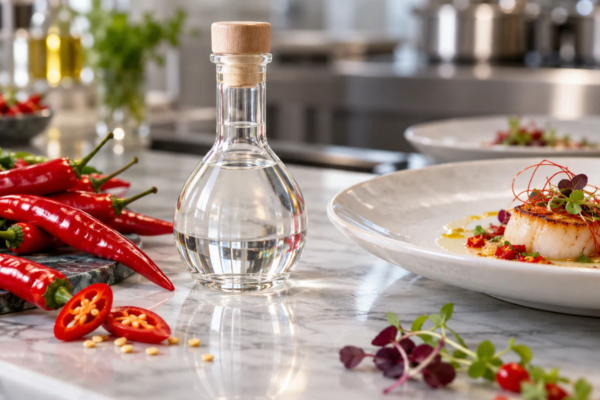
At Alinea Restaurant in Chicago, this technique has been used to extract herb aromas such as basil.Another innovative application associated with Alinea is distilling the pure essence of chillies. During this process, capsaicin, the compound responsible for the heat of chillies, largely remains behind rather than passing into the distillate.
The resulting liquid can capture some of the chilli’s aromatic character without the same level of heat, creating a different flavour experience.
Low-Temperature Flavour Extraction
While most chefs are familiar with regular distillation processes, rotary evaporation adds another dimension to cooking.The technology works under reduced pressure, lowering the boiling point of liquids. Depending on the substance and vacuum conditions, evaporation can take place at temperatures as low as approximately 35°C (95°F).
By operating at these lower temperatures, many delicate flavour compounds can be better preserved, adding complexity to the final result.
Rotary Vapor Technology in Modern Restaurant Kitchens
The term rotary vapor is sometimes used when searching for rotary evaporation equipment, although rotary evaporator and rotavap are the more accurate names.For chefs exploring modern cooking techniques, this equipment offers a way to separate, concentrate and capture flavours that may otherwise be altered during conventional high-temperature cooking.
Image and original technical reference courtesy of PolyScience.