Different Steps in Writing Your Own Cookbook
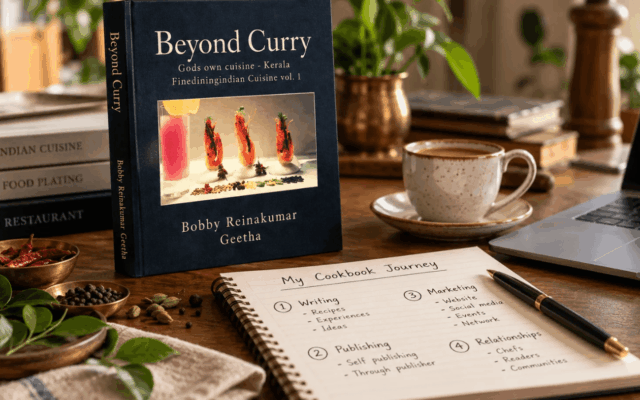
Writing your own cookbook may sound like an intellectual or complicated task. But I believe the most important thing is not using difficult words. If you can communicate your thoughts in a simple way and your readers understand the message exactly as you intended, you have succeeded.Today, even simple tools such as Microsoft Word can help with writing, spelling and basic language corrections. But the ideas, experiences and purpose behind the book must still come from you.Through my own experience of writing and compiling a cookbook, I came across a few important steps. The first one is probably the most important.
Why Do You Want to Write a Book?
Ask yourself one simple question: Why do I want to write a book?Why a book and not something else?
You need to have a strong purpose behind writing it. That purpose is what will keep you moving when you become tired, distracted or even bored.Believe me, I faced many hurdles while writing my book. I lost focus several times and, on a few occasions, even felt like stopping completely. But having a strong answer to my “why” kept me sailing.My purpose was to show the world that Indian cuisine can comfortably find its place in the world of fine dining without losing its originality or copying other cuisines.I also wanted to inspire Indian chefs to look again at the strength of our own cuisine. Sometimes we can become carried away by the glitz and glamour of international cuisines and forget the depth of what we already have.
I strongly believe that our roots are what will take us to greater heights.
What Do You Want to Write About?
Choose a subject that is close to you.When you write about something you genuinely know and understand, you will not constantly struggle to find ideas or words.
Being an Indian chef, my natural choice was a cookbook.I then narrowed the subject further to areas that were closest to my own experience: Kerala cuisine, my home cuisine, and fine dining with a strong focus on cooking techniques.My experience of working with international chefs, particularly chefs from a French culinary background, also influenced the way I approached techniques and presentation.Choosing a subject that combines your knowledge, experience and passion will make the writing process much easier.
When Do You Want to Start and Finish?
Decide when you want to start writing and, more importantly, when you want the book to be published. Having a deadline helps you monitor your own progress. This becomes particularly important when you are self-publishing. Without someone following up with you, it is very easy to procrastinate.
If you have the support of a publisher, they will normally follow up with you regarding content development and deadlines. That pressure can help you complete the book within a defined period.If you are self-publishing, I recommend finding someone close to you who can act as your timekeeper.You can even create a small penalty system. If you fail to meet a target, you may have to pay a small fine or do something for that person. The idea is simply to create accountability.
In my case, my wife was both a great support and my timekeeper. If I was wasting time unnecessarily, she would challenge me and remind me to get back to the work.It is also important to reduce distractions as much as possible. Small distractions can quietly steal a surprising amount of your writing time.
How Do You Write Your First Cookbook?
How you write your cookbook will depend greatly on the decisions you have already made about why, what and when.In my case, I wrote mainly during my off days and holiday periods.Writing requires concentration. Before sitting down, it is helpful to think clearly about the subject you are going to work on.When writing a cookbook, you also need strong knowledge and proper research about the cuisine, ingredients and techniques you are discussing.
Whenever possible, try to set aside several continuous days for writing. When you write regularly over consecutive days, your thoughts remain connected and your flow is less likely to break.Recipes also require accuracy.Measurements should be clear, consistent and preferably based on a measurement system that readers from different places can understand.
Write From the Reader’s Point of View
One of the most important lessons I learned is to think from a third person’s point of view.Imagine that the person reading your recipe is experiencing your cuisine for the first time.
Would they understand exactly what you mean?
Would they know what to do at every stage?
Your writing should allow someone unfamiliar with your cuisine to follow the recipe comfortably while still experiencing your own style of cooking.Avoid using too many technical culinary terms unless they are really necessary.Where possible, replace professional kitchen terminology with simple household cooking language. If your aim is to reach a wider audience, clarity is more important than showing how technical your knowledge is.
A successful cookbook should make the reader feel, “I can cook this.”
Writing my own cookbook taught me that creating a book is not only about recipes. It is about purpose, discipline, knowledge, communication and staying connected to the reason you started.I will continue this series with more lessons from my own experience of writing and publishing a cookbook.
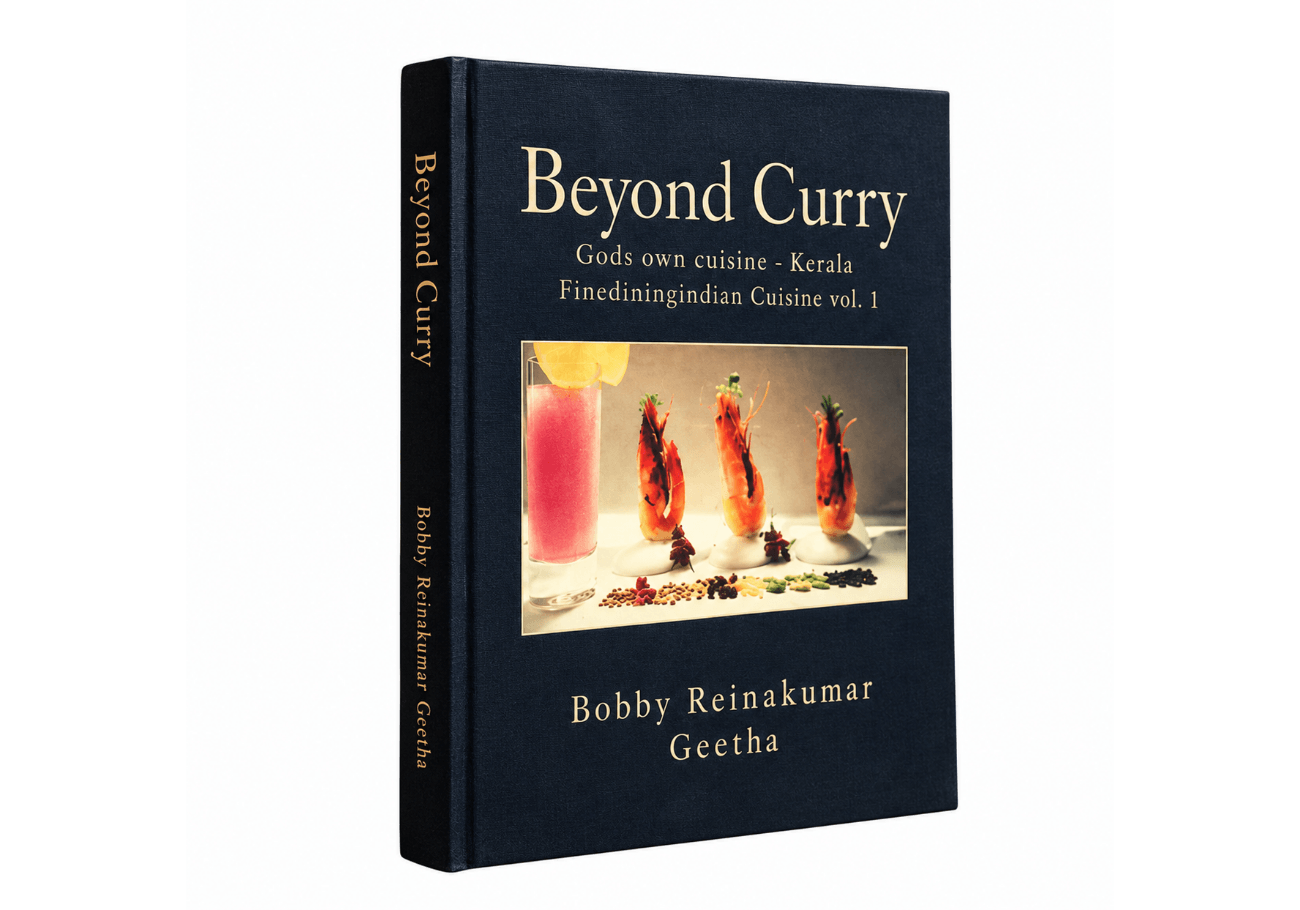
Beyond Curry: A Fine Dining Approach to God’s Own Cuisine