
NASA Space Food: What Astronauts Eat, HACCP and Food Processing
While working on this article, I came to understand why HACCP and food safety place so much importance on processes and controls.
HACCP has an interesting connection with the development of food for space missions. When food is prepared for astronauts, there is very little room for error. Everything from sourcing and processing to preservation, packaging and storage has to be carefully controlled.NASA was already working seriously on these challenges decades ago. It makes you think about our own food industry today. Are we giving the same importance to implementing HACCP procedures, or has HACCP sometimes become more about paperwork than the actual process?
Looking at how NASA space food is developed gives us an interesting perspective on why food safety systems matter.
Space Food Systems Laboratory
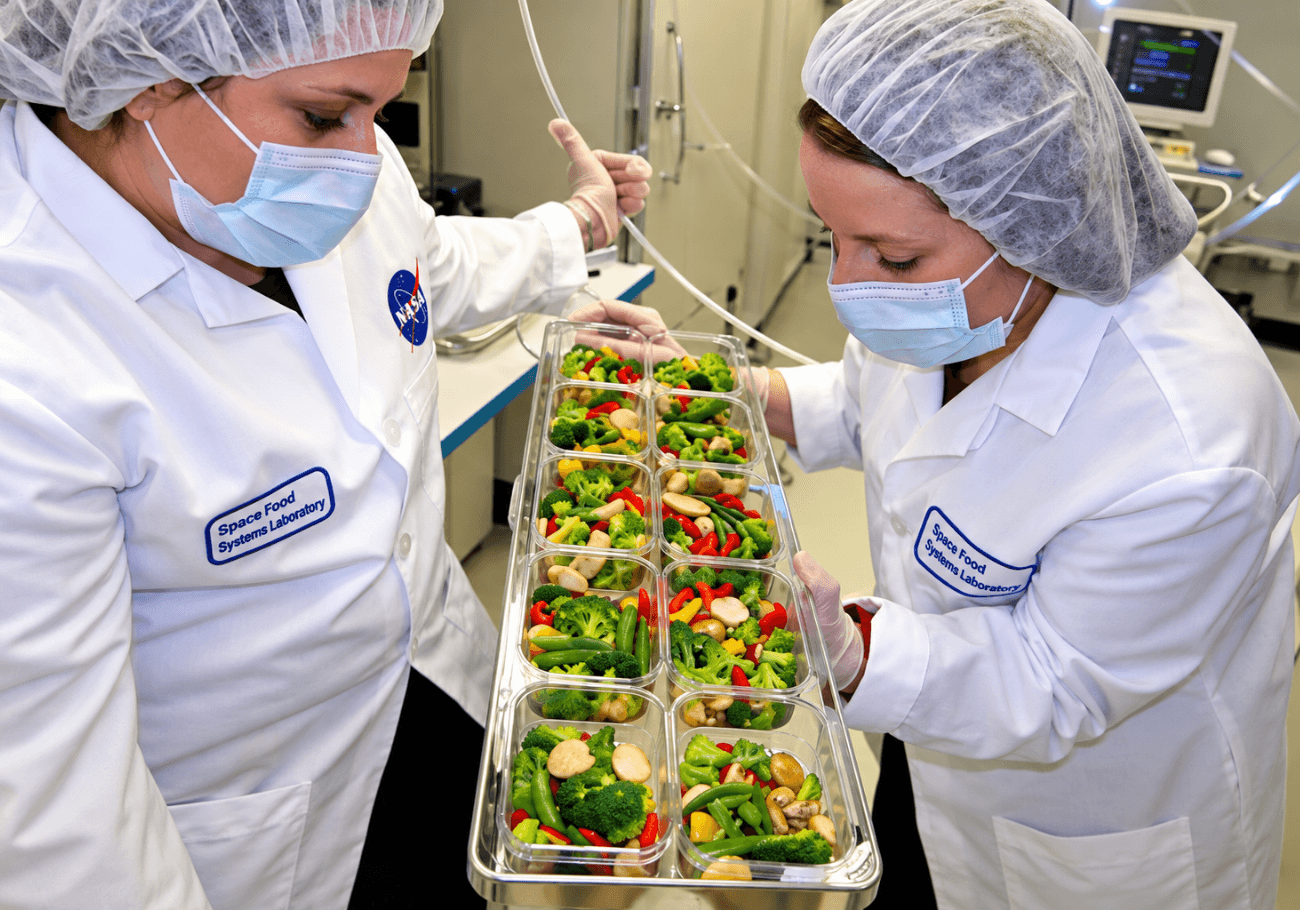
The Space Food Systems Laboratory (SFSL) is a multipurpose laboratory responsible for space food and packaging research and development.
The facility designs, develops, evaluates and produces flight food, menus, packaging and food-related equipment for space missions.Its work includes food product development, food preservation technology, sensory evaluation, menu planning, freeze-drying, blast freezing, package development and physical testing of packaging materials. It also works with modified and controlled-atmosphere packaging.
All of these processes have one important objective: making astronaut food safe, nutritious, practical and suitable for the unusual conditions of space travel.
Space Missions and the Importance of Food
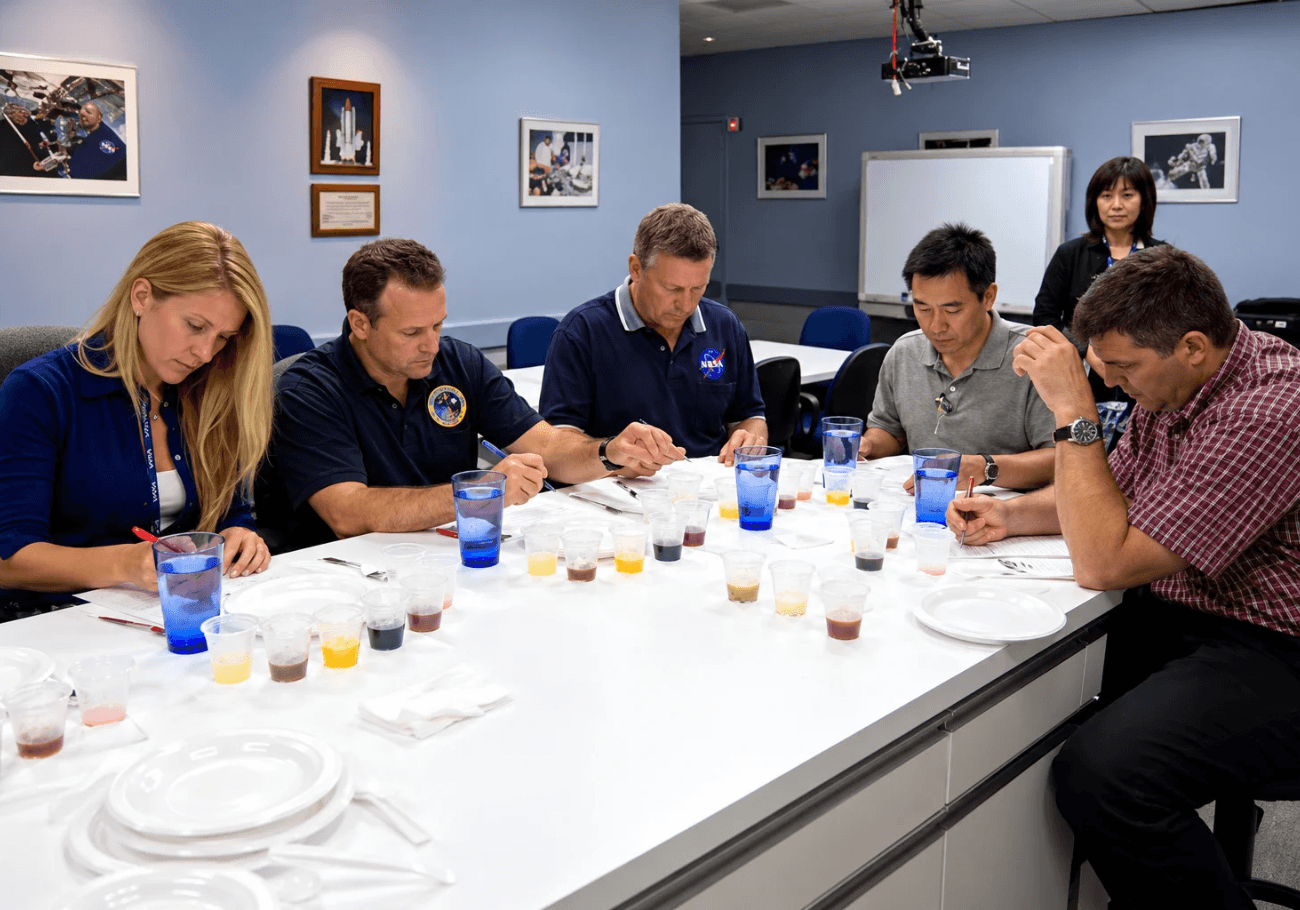
Nutrition plays an important role in maintaining the health and performance of astronauts during space flight and when they return to Earth.Providing good nutrition in space means much more than simply supplying enough calories. Space food has to be appetising, nutritious and safe, while also being easy to prepare and eat.The Space Food Systems Laboratory therefore works to provide flight food systems that meet the physiological and psychological requirements of crew members while also fitting the storage and galley requirements of the spacecraft.
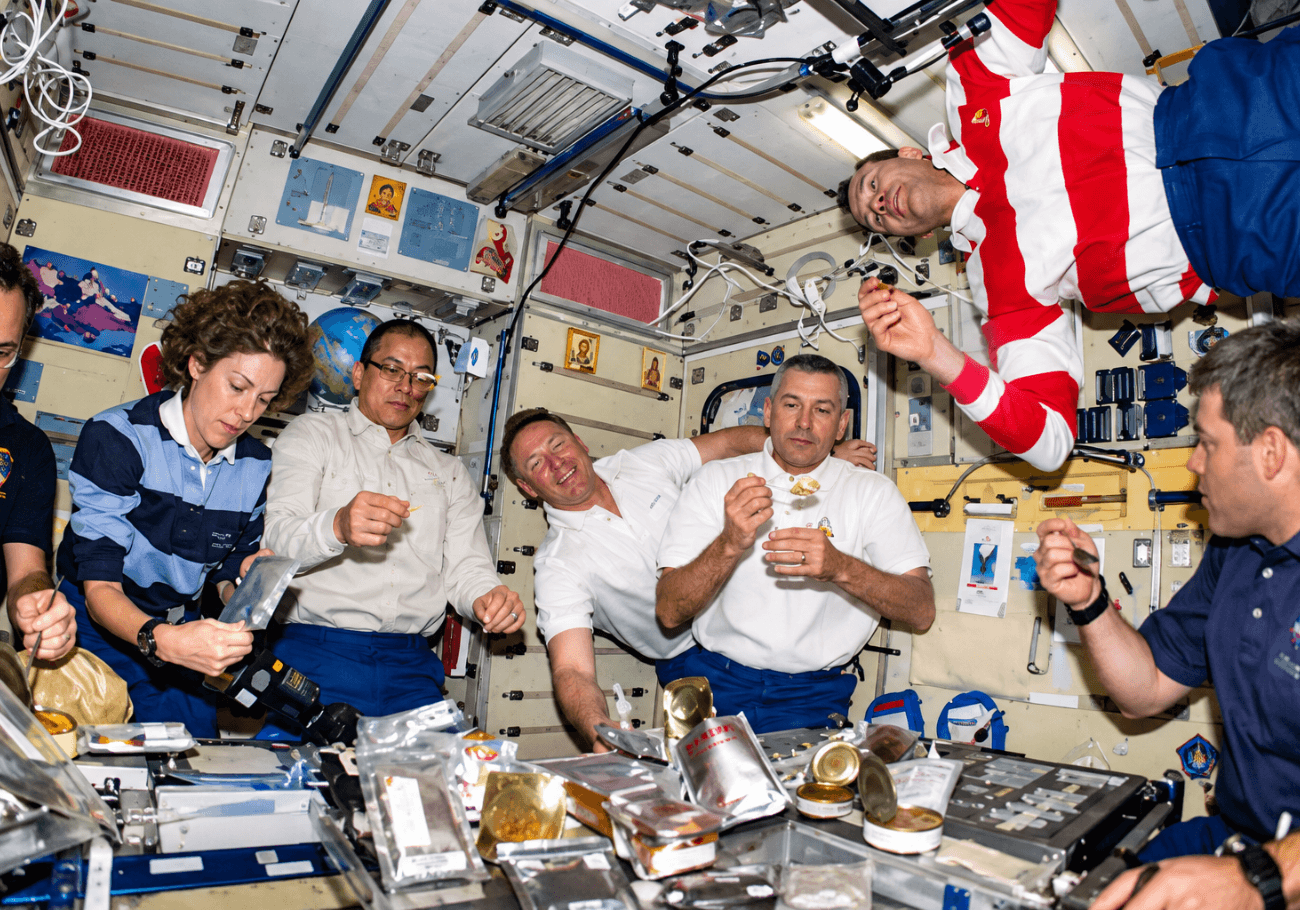
And, of course, the food needs to be practical to prepare and eat in weightlessness.
Inside NASA's Space Food Laboratory
The Space Food Systems Laboratory is located in Building 17 at the Johnson Space Center and includes four main laboratory areas:
- Test Kitchen with sensory-testing facilities
- Food Processing Laboratory or Pilot Plant
- Food Packaging Laboratory
- Analytical Laboratory
The laboratory can produce custom-moulded flight food containers and process foods using different stabilisation methods, including freezing and freeze-drying.Foods can also be packaged in a nitrogen environment for long-term storage and kept under controlled conditions.The laboratory conducts physical and sensory analysis of foods, evaluates prototype and flight food preparation equipment, and develops methods for preparing and serving food during space flight.
Advanced Food Technology Project
- The Advanced Food Technology Project focuses on providing space crews with a food system that is safe, nutritious and acceptable while balancing vehicle mass, storage volume, waste and food preparation time.
- For exploration missions, shelf life becomes particularly important.A packaged food system may need to remain suitable for three to five years, creating challenges beyond those faced by shorter-duration missions.
- Food also has another purpose in space.For astronauts living for long periods in an unfamiliar and difficult environment, familiar food can contribute to psychological well-being as well as providing nutrition.
Evaluation of Space Food Packaging
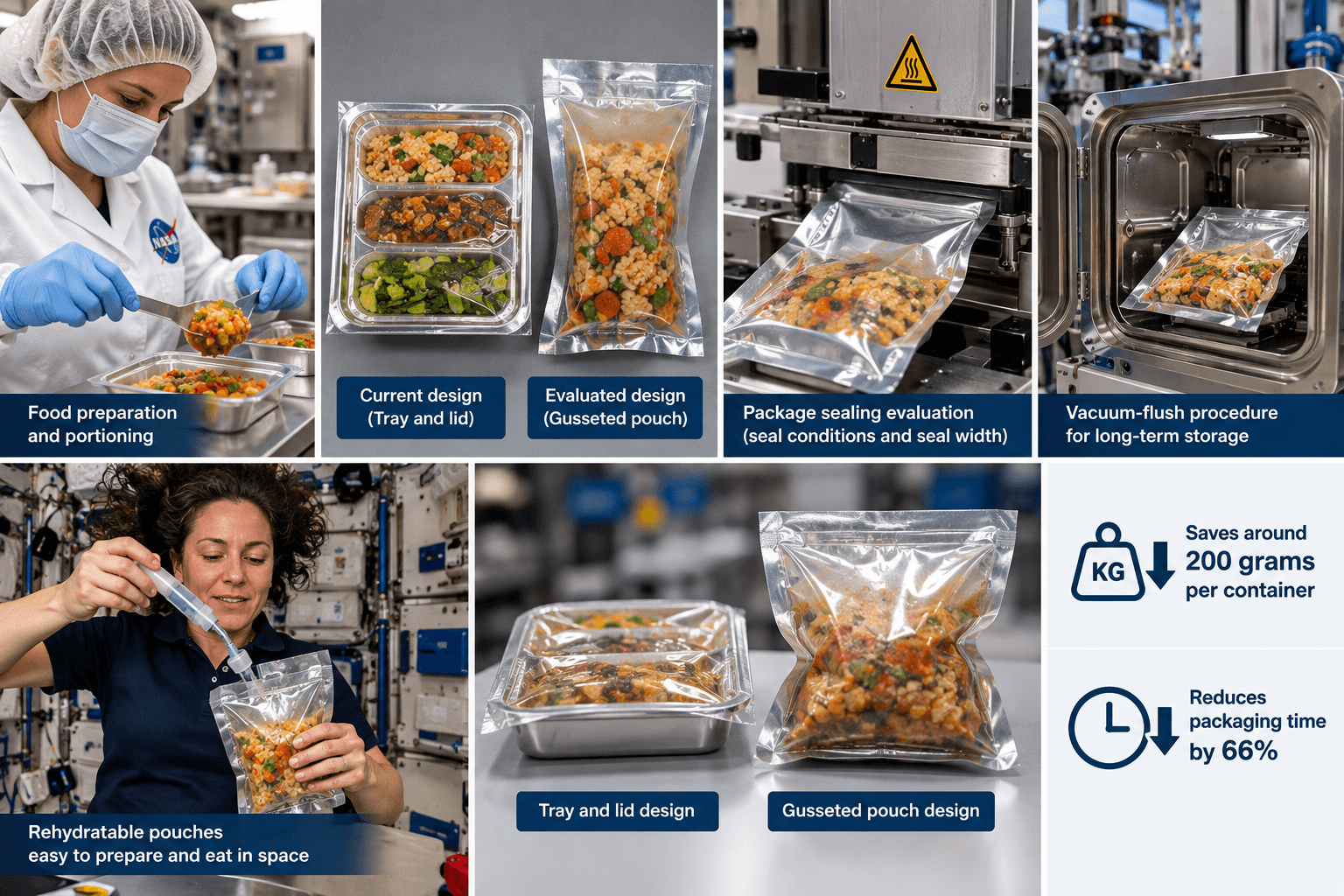
Packaging is an important part of the overall NASA food safety and space food system.A total-system approach considers every part of a process and looks at how each can be improved. For exploration missions, food systems need low mass, good quality and a long shelf life.Packaging failures, unnecessary packaging material or oxygen trapped inside a package can all affect the system. NASA therefore evaluated factors including package sealing conditions, seal width, vacuum-flush procedures and different package configurations.As part of this work, a gusseted bag was evaluated as a possible replacement for the existing tray-and-lid design.The evaluation identified minimum temperatures for effective sealing of pouches and rehydratable packages. Improved vacuum-flush settings were also identified and incorporated into ISS provisioning processes.
The proposed gusseted pouch itself did not significantly reduce mass, but it could allow a change in film material, saving around 200 grams per container while reducing packaging time by 66 percent
Food Processing vs. Packaged Food Systems
- The current crew diet described in the research was supplied through prepackaged, shelf-stable food produced on Earth.
- Longer missions, however, could require part of the astronauts’ diet to be grown, processed and prepared within a space habitat.
- Researchers therefore examined how food processing and bioregenerative food systems could potentially be used during future Mars habitat missions.
- African Sweet Potato and Peanut Soup, Flourless Peanut Butter Cookies and Spanish Rice were among the dishes incorporated into a 10-day menu cycle for systems using bioregenerative and bulk food ingredients.
- Several menu scenarios were developed using different combinations of farmed or shipped salad crops, bulk crops and prepackaged dishes.
- Three 10-day menu cycles with similar calorie and nutrient intake were created for comparison.
- Analysis showed that the food up-mass of a completely prepackaged system was more than double that of the closest alternative system, despite a significant proportion of the prepackaged food being freeze-dried.
But food mass alone does not tell the whole story. Equipment mass, volume, power requirements and crew time also have to be considered when deciding which system works best for a long-duration mission.
What Happens to Nutrition During Storage?
Another challenge with astronaut food is maintaining its nutritional value during long periods of storage.Crew members rely on food supplied through NASA to meet their nutritional requirements. However, vitamins can degrade because of heat processing, oxidation and exposure to light.
This means commercially sterile foods used for space missions may have different nutrient profiles by the time they are eaten.To understand this better, researchers studied vitamin and mineral levels in NASA space food after processing and during storage periods of up to five years.Samples were analysed immediately after stabilisation processing and again after one and three years to understand how storage affected nutritional quality.
During 2010, twenty new foods were added to the ground study, while twenty-six food items underwent repeat testing on the anniversary of their original stabilisation processing.
Researchers could not draw broad conclusions about vitamin stability because of inconsistencies in the estimates. However, closer examination of individual foods showed degradation of some sensitive vitamins, chemical conversion that increased vitamin D, and overfortification of some commercial beverage powders.The study was designed to continue through 2012 and analyse individual NASA space food items.
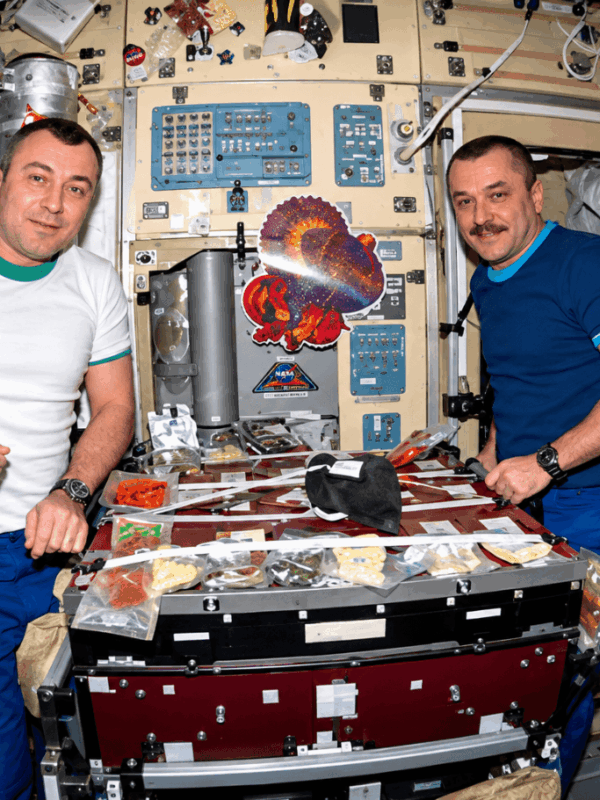
What NASA Space Food Can Teach Us About HACCP
Looking at the complete process — sourcing, processing, preservation, packaging, storage and finally consumption — makes it easier to understand the thinking behind HACCP.Food safety is not simply a document or checklist. It is about identifying where something could go wrong and controlling that risk throughout the process.
Space food may be an extreme example, but the principle is relevant to any professional food operation.When the food has to travel beyond Earth, there is no easy way to replace a product because something went wrong during processing or packaging. That makes attention to every stage of the food system essential.
And perhaps that is the most interesting lesson from looking at what astronauts eat: good food safety begins with the process, not the paperwork.