Kerala Malabar Parotta Recipe – Flaky Layered Indian Bread

30 minutes + approximately 60 minutes resting

medium

15–17 parottas

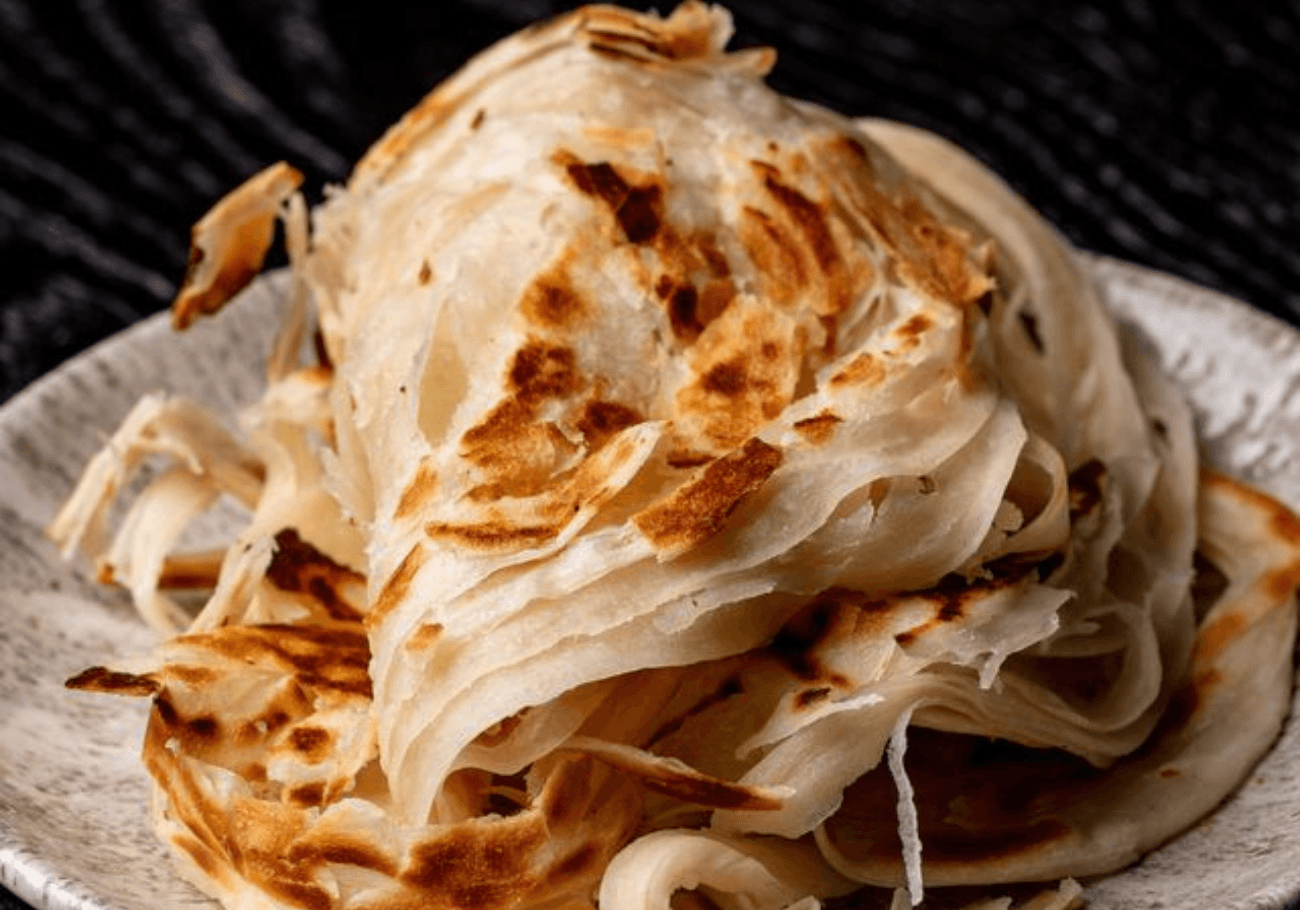
This Malabar parotta recipe shows you how to prepare the famous flaky and layered flatbread from Kerala using plain flour, egg, milk and oil. The secret to an authentic Kerala parotta recipe lies in stretching the dough very thin, folding it into layers and rolling it into a spiral before cooking.

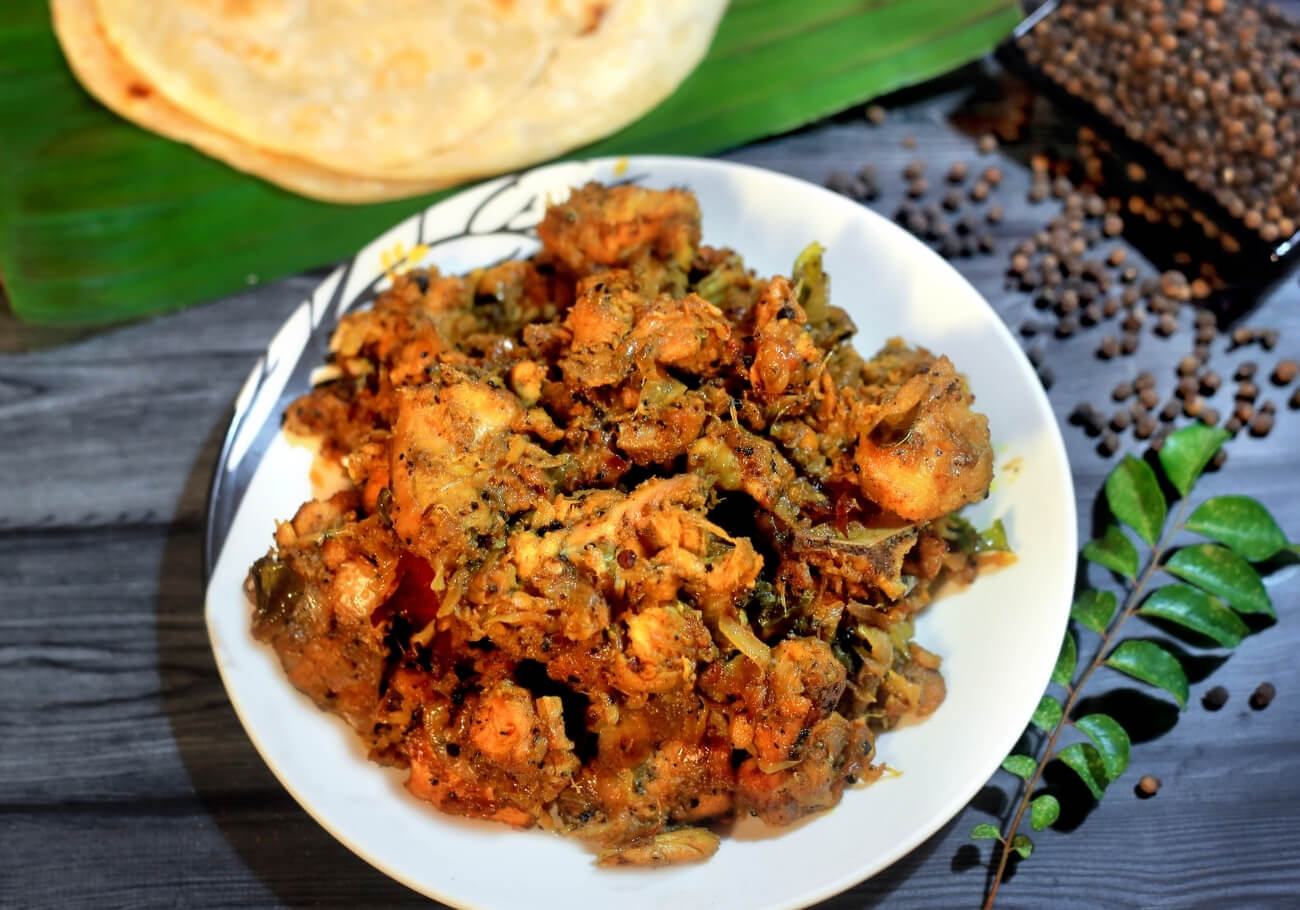
Once cooked on a hot griddle, the parotta is gently beaten between the palms to separate its soft, flaky layers. This traditional layered parotta recipe is ideal for serving with Kerala chicken curry, beef curry, vegetable kurma or other South Indian dishes.

If you are exploring Indian bread recipes or looking for an authentic homemade parotta recipe, this step-by-step method from Beyond Curry makes the technique much easier to understand.

No Reviews

Ingredients

Adjust Servings
500 g Plain flour / all-purpose flour
3 g Baking powder
medium1 Egg
g4 Salt
6 g Sugar
240 ml Milk
As required Water
For Rolling and Cooking
150 ml Neutral oil

Nutritional Information

3,840 kcal Calorie
80 g Protein
480 g Carbohydrate
176 g Fat
32 g Fiber

Directions

1.

Prepare the Parotta Dough

Add the plain flour, baking powder, salt and sugar to a large mixing bowl. Mix the dry ingredients together using a clean hand. Add the egg and begin combining it with the flour.
Gradually pour in the milk while mixing until the dough starts coming together. Add a small quantity of plain water only if required. Knead thoroughly until you have a firm, smooth dough. Rub a little oil over the surface, cover with a moist cloth and allow the dough to rest for 30 minutes.
Mark as complete
2.

Divide and Rest the Dough

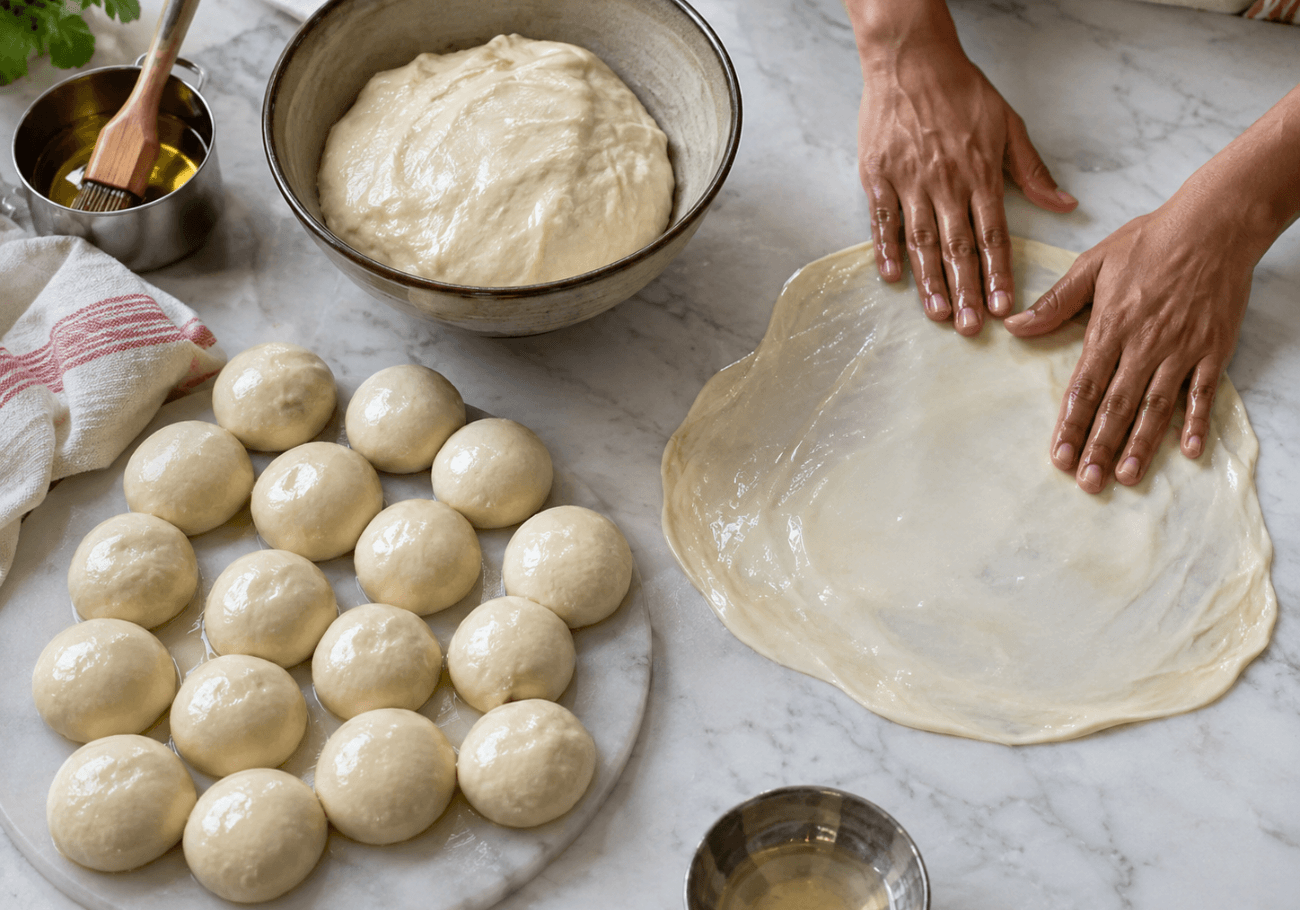
Divide the rested dough into 15–17 equal portions, approximately 50 g each. Shape each portion into a smooth ball.
Apply a little oil over each dough ball. Cover and rest them for another 15 minutes.
Mark as complete
3.

Stretch the Dough Thin

Oil the work surface. Take one dough ball and flatten it as thinly as possible until it resembles a very thin sheet.
Use oil rather than flour while stretching or rolling. Brush oil across the entire surface of the dough sheet. This thin sheet is essential for creating the characteristic layers of a Malabar parotta.
Mark as complete
4.

Create the Layers

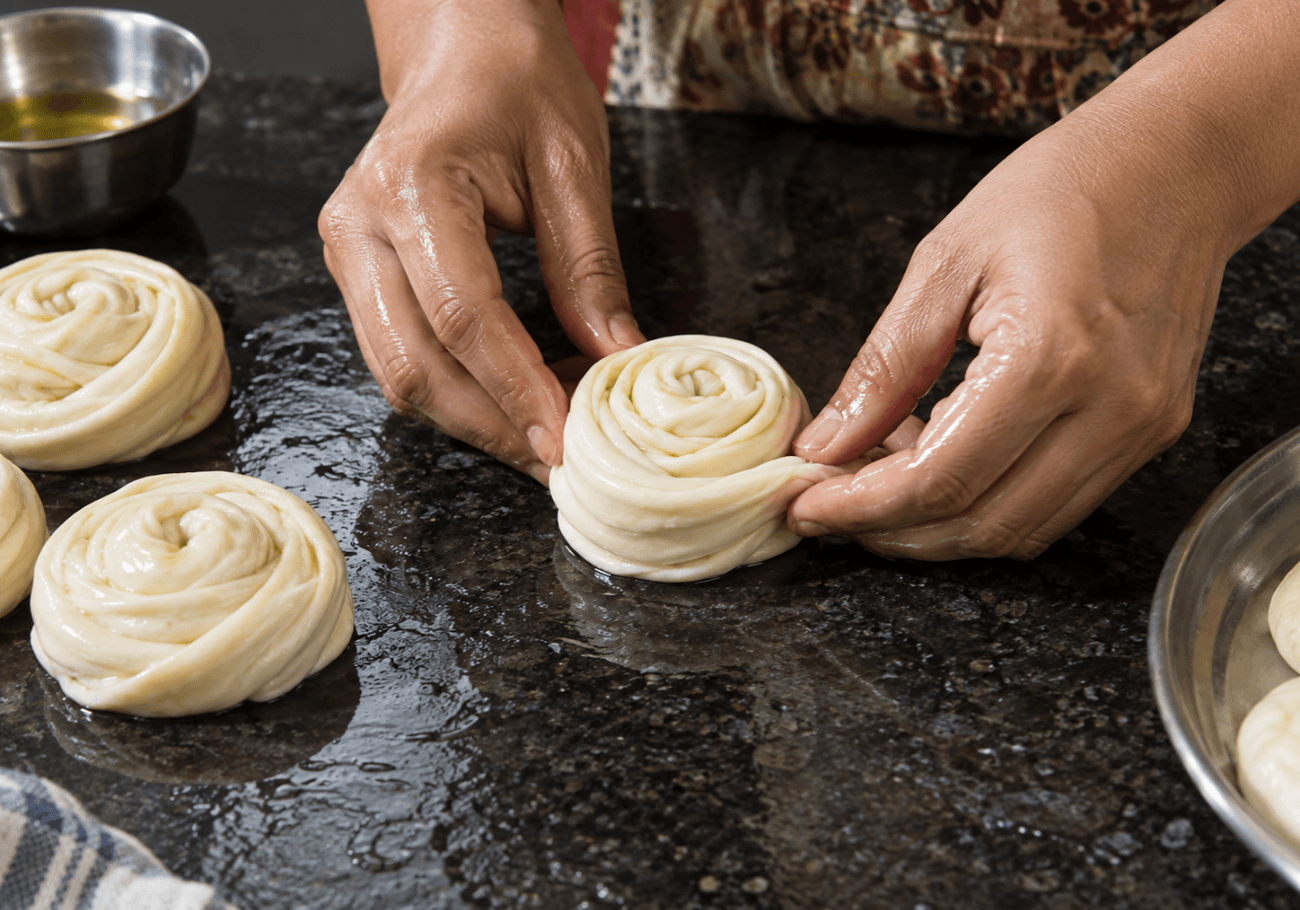
Starting from one side, fold the dough sheet back and forth width-wise, creating a W-shaped or paper-fan pattern. Continue until the entire sheet has been folded into a long strip. This folding technique creates the multiple layers inside the parotta
Mark as complete
5.

Form the Spiral

Take the folded strip and roll it lengthwise from one end towards the other, forming a spiral similar to a spool. Tuck the loose end underneath the spiral.
This prevents the layers from opening when the dough is flattened later. Repeat with the remaining portions. Cover the spiral rolls and allow them to rest for another 15 minutes.
Mark as complete
6.

Flatten the Parotta

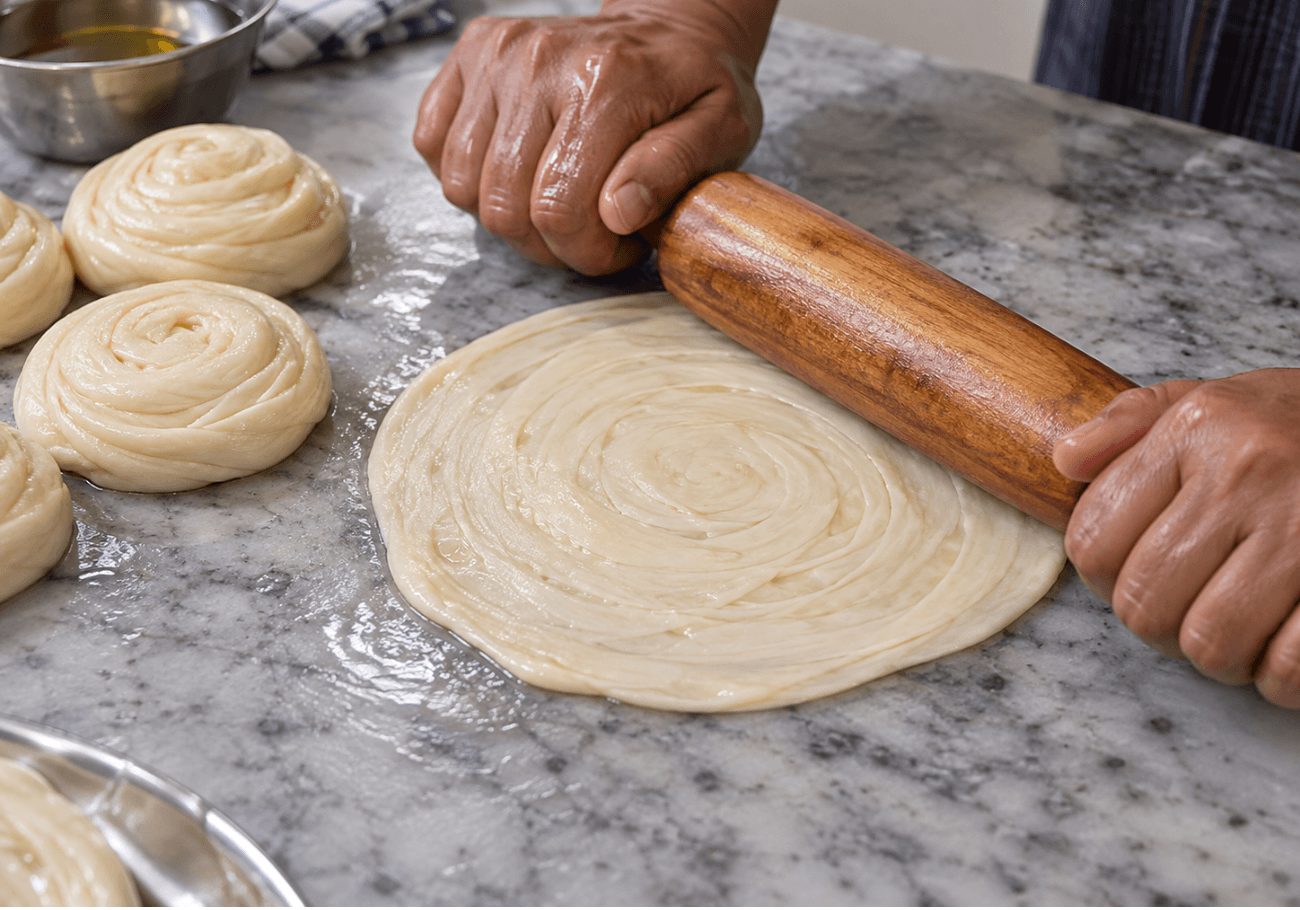
Preheat a cast-iron griddle, metal tawa or flat pan. Lightly oil the work surface. Take one rested spiral and gently flatten it into a round parotta approximately 0.5 cm thick. Traditionally, the dough can also be flattened by hand using the fingers.
Place the flattened parotta on the hot griddle. Cook over medium to medium-high heat. Smear a little oil over the surface. Cook both sides until you see golden-brown spots and the layers begin to puff. Each parotta should take approximately 2–3 minutes to cook. Maintain a steady heat so the centre cooks properly without burning the outside.
Mark as complete
7.

Separate the Layers

Remove the cooked parotta from the pan. Brush lightly with oil. While still warm, place the parotta between your palms and gently beat or clap both sides together.
This loosens and separates the layers, creating the classic flaky texture associated with Kerala parotta. Do not beat too aggressively, as the parotta may tear. Repeat with the remaining dough.
Mark as complete

Notes

*Nutrition info is a rough estimate based on the ingredients. Note that values may vary from case to case*
*As with all recipes, there is a number of ways you can get things done. If you believe that some of the instructions can be improved, or have a good alternative solution, feel free to leave a comment*

Leave a Reply

Your email address will not be published. Required fields are marked *