Kerala Cooking Utensils: Traditional Tools Used in Kerala Kitchens
Kerala cuisine has developed around ingredients, cooking methods and utensils that have been used in homes for generations.Some Kerala cooking utensils are designed for one particular dish, while others are used for frying, steaming, preparing curries or cooking food in larger quantities.
Here are some of the traditional utensils commonly associated with Kerala cooking.
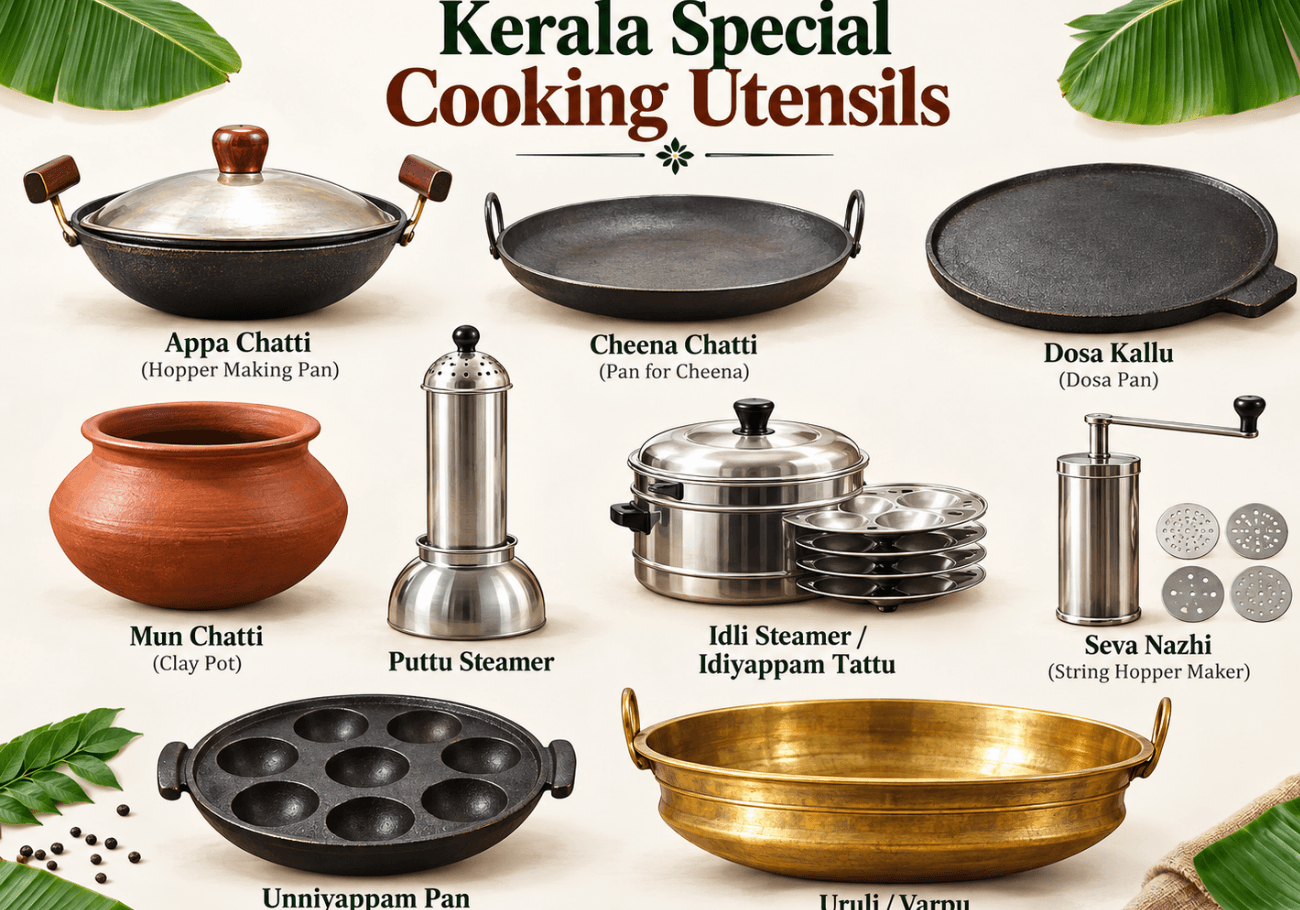
Appa Chatti
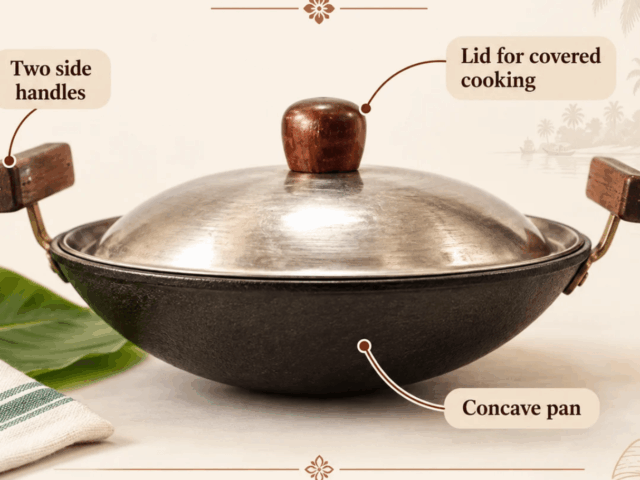
The Appa Chatti is a concave-shaped pan traditionally used for making appam or hopper.
Its curved shape helps the batter spread around the sides while remaining thicker in the centre. The pan is normally covered with a lid while the appam cooks.
Appa Chatti may be made from cast iron or other modern cooking materials.
.
Cheena Chatti
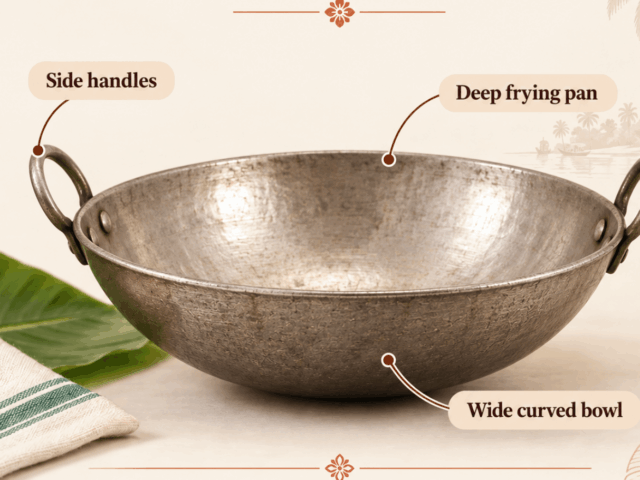
Cheena Chatti is a deep, curved cooking pan used for frying and stir-frying.
Traditionally made from materials such as cast iron or aluminium, its wide shape makes it suitable for preparing fried dishes and other everyday Kerala recipes
Dosa Kallu
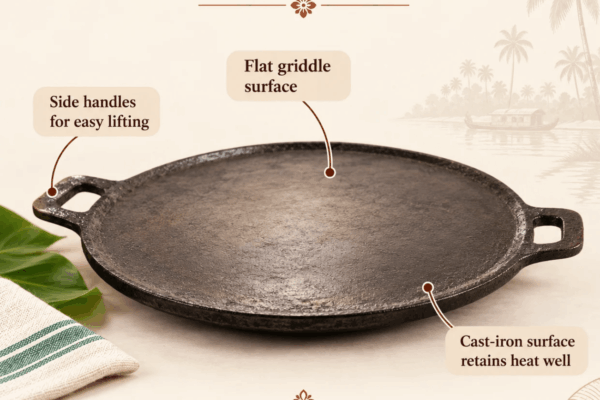
A Dosa Kallu is a flat griddle used for making dosa.
Cast iron versions are traditionally preferred because the broad flat surface provides enough space for spreading dosa batter into a thin layer.
The utensil is also useful for other griddle-based preparations
Mun Chatti
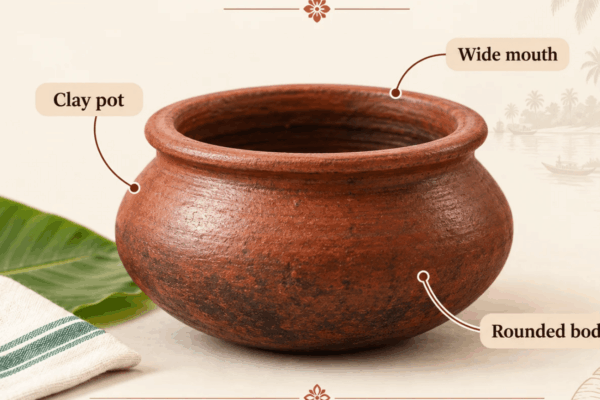
The Mun Chatti is a traditional clay pot used for cooking curries.
Clay pots remain closely associated with Kerala home cooking, particularly for dishes where slow cooking and gentle heat are preferred.
They also give the cooking process a distinctly traditional character
Puttu Steamer
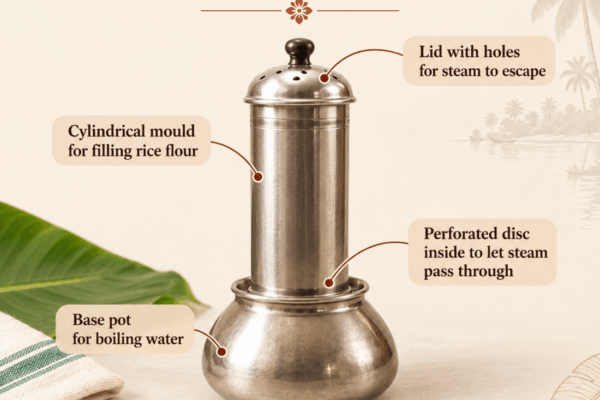
Puttu requires its own distinctive steaming utensil.
A traditional Puttu steamer consists of a base pot for boiling water and a cylindrical section that holds the prepared rice flour mixture.
Steam passes through the cylinder and cooks the puttu without directly immersing it in water
Idli Steamer and Idiyappam Tattu
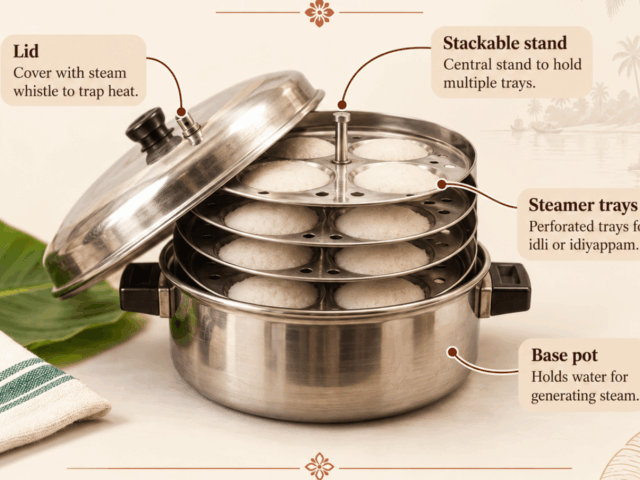
An Idli steamer uses stacked trays positioned above boiling water.
The trays hold the batter while steam circulates through the vessel. Similar steaming trays or tattu can also be used during the preparation of idiyappam
Seva Nazhi
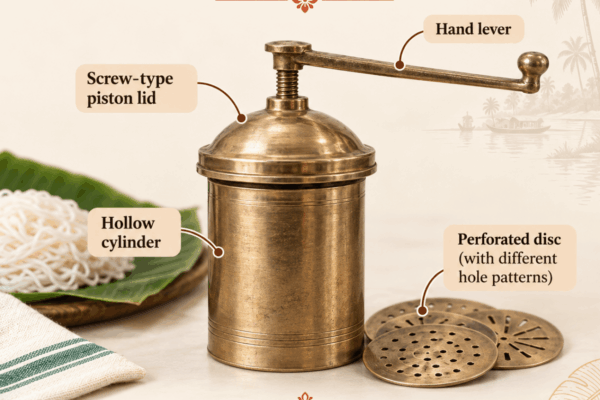
The Seva Nazhi is a traditional press or extruder used for making idiyappam, also known as string hoppers.
The dough is placed inside the hollow cylinder and pressed through a perforated disc to create thin strands.
Different perforated discs can produce different strand sizes and shapes
Unniyappam Pan
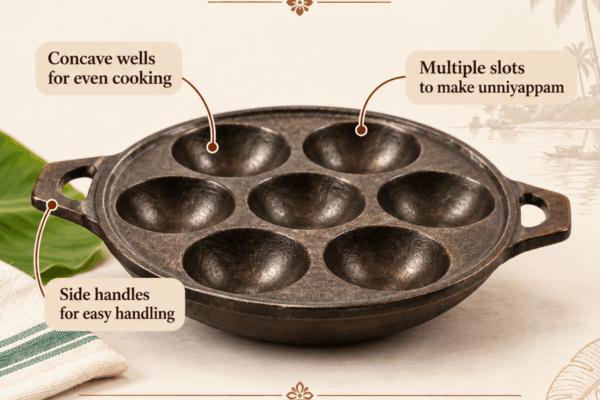
The Unniyappam pan contains several rounded wells that hold small portions of batter.
Each cavity allows the traditional sweet snack to cook individually while maintaining its characteristic rounded shape.
Uruli or Varpu
An Uruli or Varpu is a wide, relatively shallow vessel traditionally used for preparing larger quantities of food.
These vessels may be made from bronze, aluminium or other heavy metals and are especially useful when cooking for gatherings or preparing dishes in larger batches
Traditional Kerala Cookware and Cuisine
These utensils show how closely Kerala cooking techniques and cookware have developed together.
From steaming puttu to preparing appam, dosa and curries, the shape and construction of each utensil has a practical purpose.
Even with modern cookware available today, traditional Kerala kitchen utensils remain an interesting part of the region’s food culture and cooking heritage
1 Comment
Comments are closed.
Cooking with clay cookware dates back to our earliest and oldest civilizations. Despite the numerous differences with civilizations of the past, the one binding feature seems to have been their practice of cooking food in clay. All our ancestors seemed to have shared this common ground. Clay pot cooking is a cooking method that is as new as tomorrow and as old as time itself.
Sornam Potteries is prominent studio pottery unit engaged in manufacturing and marketing of earthenware kitchenware, cookware, tableware, serve ware and artware. Visit us at http://www.sornampotteries.in for more details.