
South Indian Idli Recipe | Soft Homemade Idli with Fermented Batter

FineDiningIndian
September 23, 2015
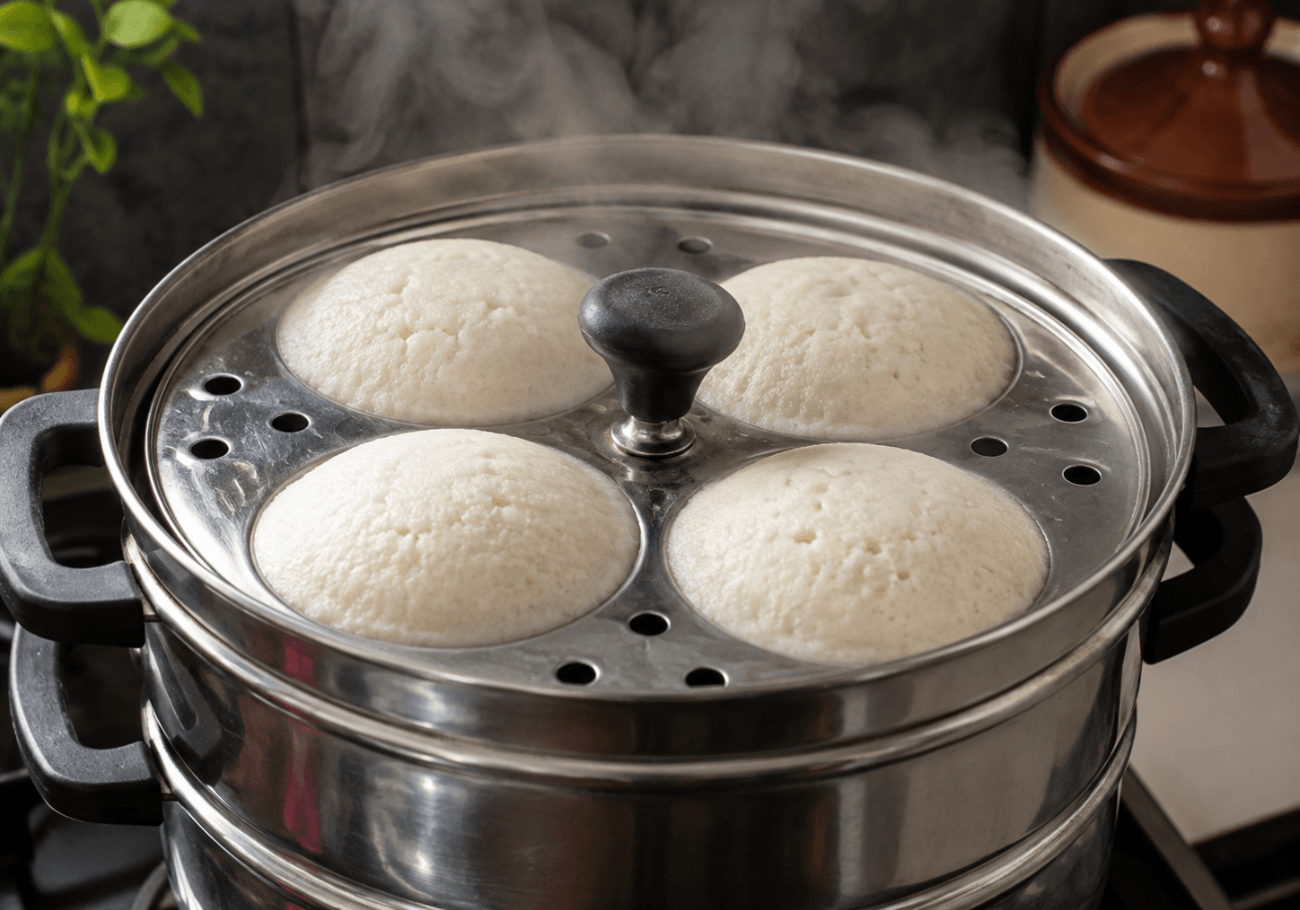
This South Indian idli recipe shows how to make soft, fluffy idlis at home using rice, split black gram lentils, fenugreek seeds and natural fermentation. Idli is one of the most popular Indian breakfast recipes and is traditionally steamed rather than fried, making it naturally very low in fat.
The key to a good soft idli recipe is preparing a smooth idli batter recipe and allowing it enough time to ferment. Proper fermentation helps the batter rise and gives the steamed idlis their light, airy texture.
This simple homemade idli recipe is naturally vegetarian and, when prepared with uncontaminated ingredients, gluten-free. Serve hot idlis with sambar, coconut chutney or other classic South Indian recipes.
No Reviews
Ingredients
Adjust Servings
| 200g white rice | |
| 50g split black gram lentils / urad dal | |
| 5g fenugreek seeds | |
| 50–250 ml water | |
| salt, or to taste | |
| A small amount of oil, for greasing the idli moulds |
Nutritional Information
–50 kcal
Calorie
2g
Protein
10g
Carbohydrate
0.5g
Fat
1g
Fiber
Directions
1.
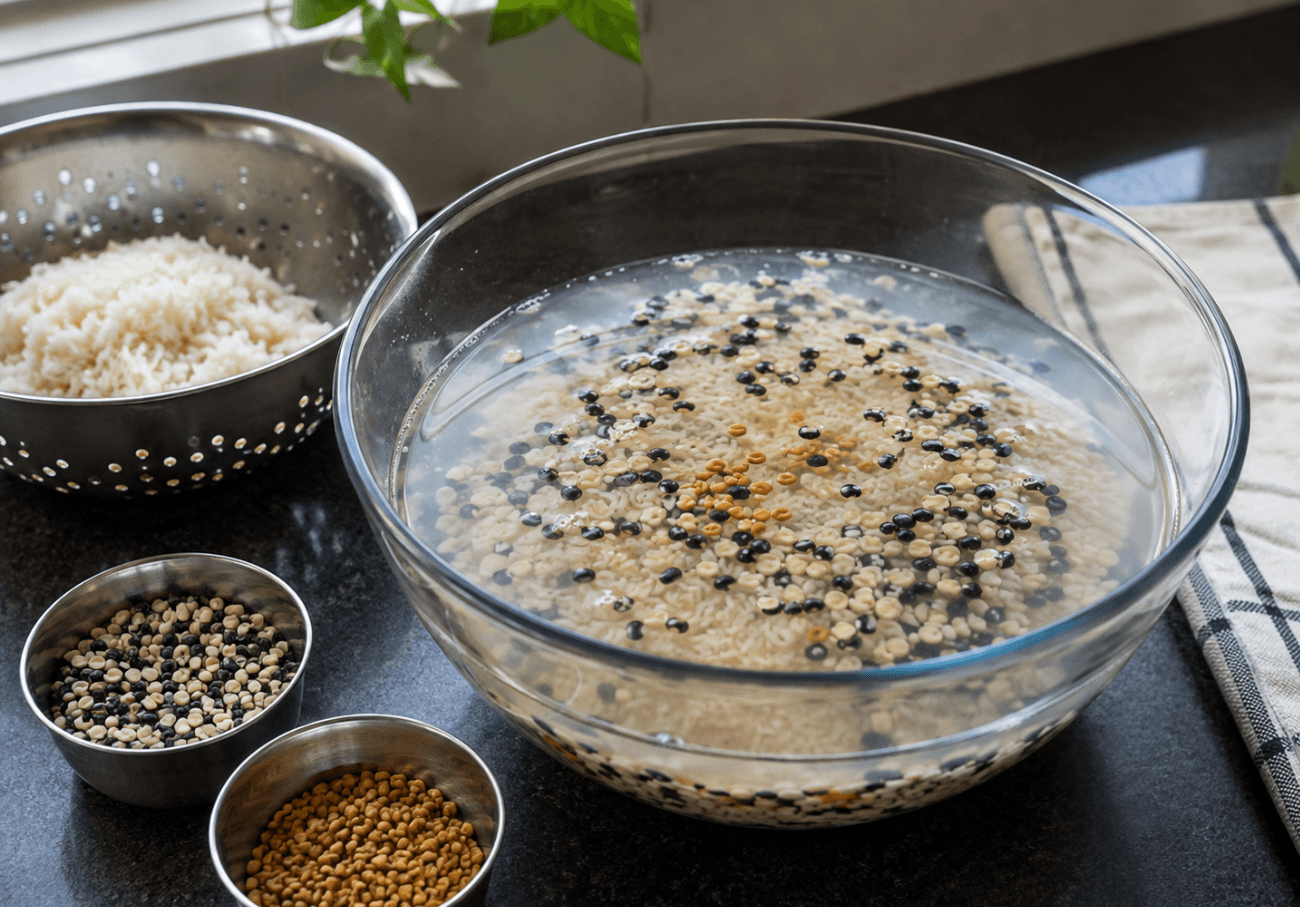
Wash and soak
Wash the rice, urad dal and fenugreek seeds thoroughly.
Soak them together in plenty of water for at least 5 hours or overnight.
Proper soaking helps produce a smoother batter for this idli batter recipe.
Drain the soaked rice, lentils and fenugreek.
Rinse once more and allow the excess water to drain completely.
Mark as complete
2.
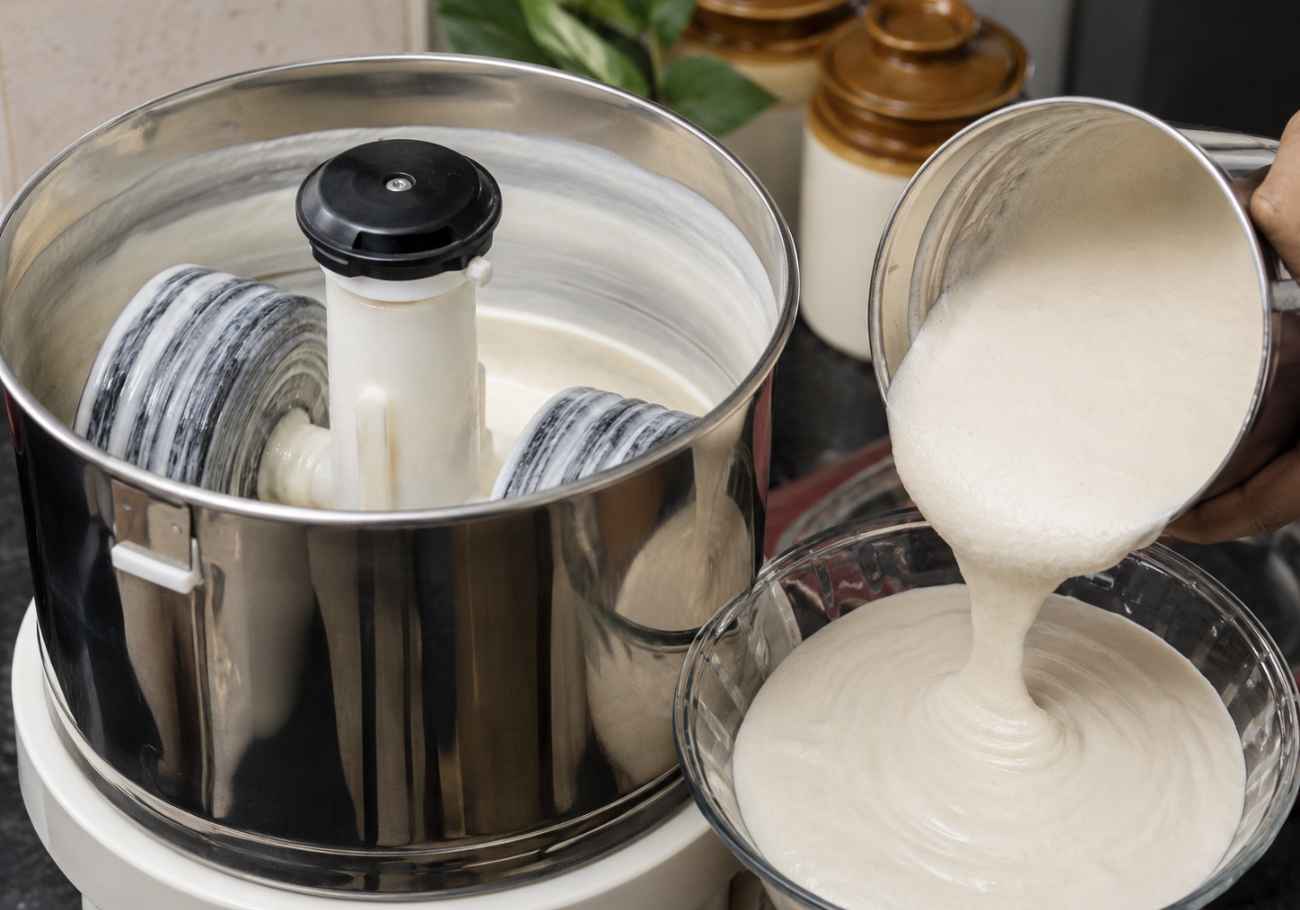
Grind the batter
Transfer the soaked ingredients to a wet grinder or powerful blender.
Grind gradually, adding only enough water to create a smooth, thick batter.
For the best soft idli recipe, the batter should feel completely smooth when rubbed between your fingers and should not have a grainy texture.
Continue grinding until the batter looks smooth and slightly glossy.
The batter should be thick but pourable rather than watery.
A stone grinder can help create a light and well-aerated batter for a traditional South Indian idli recipe.
Mark as complete
3.
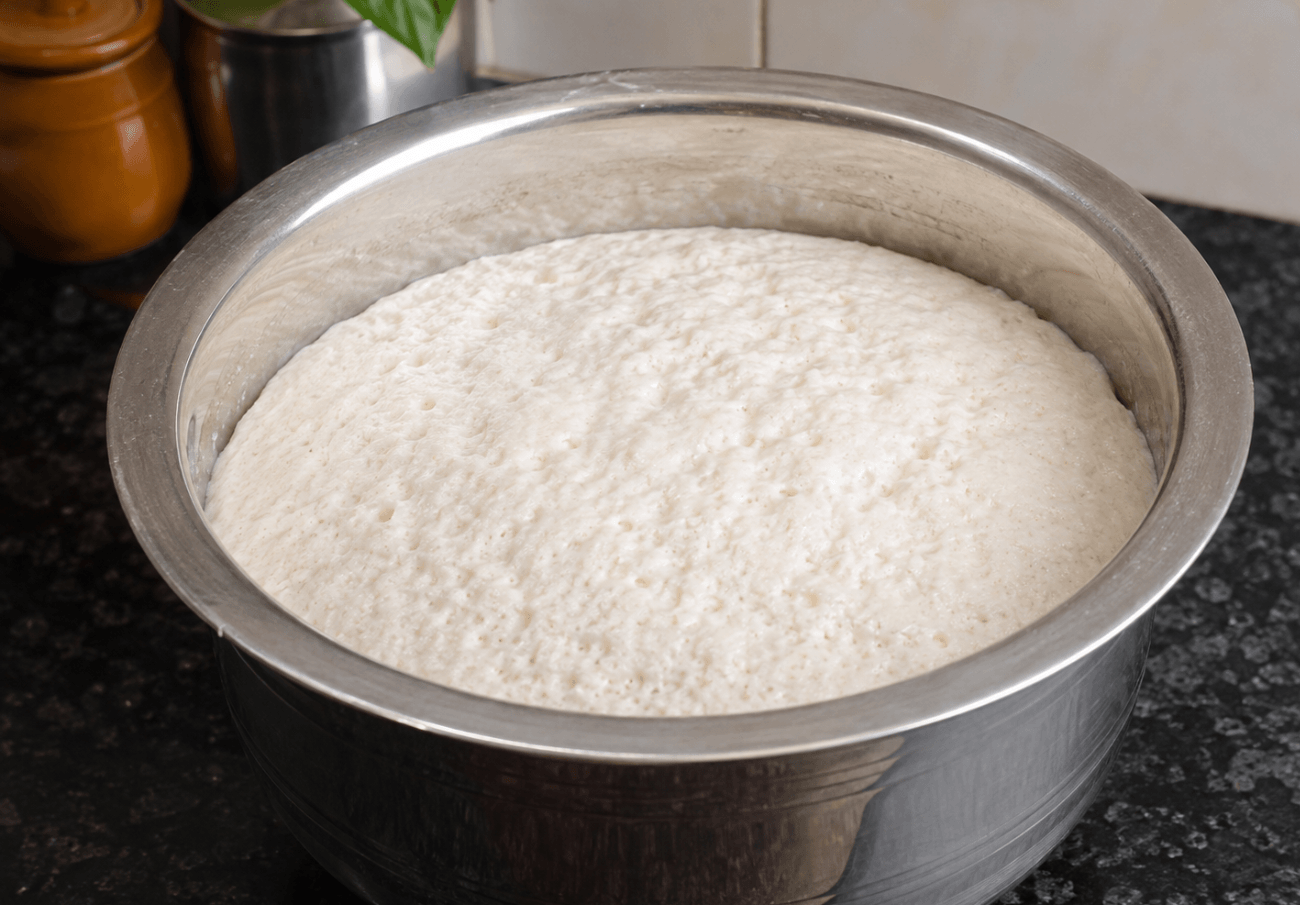
Ferment the idli batter
Transfer the batter to a large, deep container, leaving enough empty space for it to rise.
Cover loosely and leave at room temperature to ferment until the batter has visibly increased in volume.
Depending on the room temperature, fermentation can take approximately 8–12 hours.
Once fermented, the batter should look aerated and slightly risen.
Stir it gently. If you are not making idlis immediately, refrigerate the batter until required.
Fermentation is particularly important for homemade idli recipes because unfermented batter can produce dense or hard idlis.
Mark as complete
4.
Add salt and adjust consistency
Take the required quantity of batter and add salt.
Mix gently.
For idli, keep the batter relatively thick. If using the same batter for dosa, it can be thinned with a little more water.
Lightly grease the idli moulds with oil.
Pour the fermented batter into each mould, filling them without overflowing.
Mark as complete
5.
Steam the idlis
Place the filled idli stand inside a preheated steamer.
Cover and steam for approximately 8–10 minutes, depending on the size of the idlis and the steamer.
Avoid over-steaming, as this can make the idlis dry.
Insert a clean knife, skewer or toothpick into the centre of one idli.
If it comes out clean without wet batter sticking to it, the idlis are cooked.
Allow them to rest for 1–2 minutes before removing them from the mould.
Serve this South Indian idli recipe warm with sambar or coconut chutney for a classic Indian breakfast recipe.
Mark as complete
Notes
*Nutrition info is a rough estimate based on the ingredients. Note that values may vary from case to case*
*As with all recipes, there is a number of ways you can get things done. If you believe that some of the instructions can be improved, or have a good alternative solution, feel free to leave a comment*


Leave a Reply